January 29, 2026 · Jimeng Sun, Keiji AI

For fifty years, the best career advice was simple: learn to delegate. As you rise, stop doing and start managing. Your job is to set direction, hire well, and get out of the way.
That advice is now wrong.
The Gospel of Delegation
We inherited our management philosophy from the industrial era. Peter Drucker taught us that a manager's job is to multiply output through others. The assembly line proved it: one person can only do so much, but one person directing ten can do ten times more.
This logic carried into the knowledge economy. Senior leaders were supposed to operate at higher levels of abstraction. You don't write the memo — you review it. You don't build the model — you interpret it. You don't code the feature — you prioritize it.
Delegation became a status symbol. The more senior you were, the less you did yourself. "I have people for that" was a flex.
The math made sense. If explaining a task took 30 minutes and doing it took 3 hours, delegation was obvious. You bought back 2.5 hours to spend on "higher-leverage" work — which usually meant more meetings about work others would do.
What Changed
AI broke the equation.
The same task that took your team three days now takes you 10 minutes — because you have the context, the taste, and now, the tools.
Consider what's changed:
- Writing: A document that took a week of drafts and reviews now takes an afternoon with AI assistance.
- Analysis: Data work that required a data scientist, a week, and three Slack threads now happens in a conversation.
- Research: Competitive analysis, market sizing, literature review — hours instead of weeks.
- Code: Functional prototypes that required an engineering sprint now emerge in a day.
- Sales: Prospect research, outreach emails, proposal drafts, CRM updates: what took a sales ops team now takes minutes.
- Marketing: Social content, competitive positioning, conference research: a founder can now do what required an agency.
The bottleneck has shifted. Explaining what you want — transferring context to another person — now takes longer than just doing it. Every delegation involves a lossy compression: your full understanding reduced to a brief, a ticket, a meeting. The recipient fills gaps with assumptions. You review, correct, iterate. Weeks pass.
Or you could have done it yourself in an hour.
Leaders Who Build
The best leaders have noticed. They're becoming individual contributors again — not because they have to, but because it's now the highest-leverage use of their time.
- Jensen Huang runs NVIDIA with 60 direct reports and no scheduled 1:1s. He stays focused on chip architecture, strategy, and product. No layers of abstraction. No delegation chains. Just a CEO who still does the work.
- Brian Chesky flattened Airbnb in 2020, eliminating most middle management. He got closer to the product, reviewing designs personally, making decisions that would have been delegated three levels down. Airbnb's stock has tripled since.
- Tobi Lütke told Shopify employees: before asking for more headcount, show me how you've used AI. He expects everyone — including himself — to use AI as a first resort, not after exhausting human options.
- Patrick Collison still reviews code at Stripe, a company worth $95 billion. He writes internal documents. He stays technical. He could delegate everything. He chooses not to.
These aren't micromanagers. They're leaders who realized that with AI, their personal output can be extraordinary — and that delegating actually slows things down.
My Own Setup
I run an AI company. I could delegate everything. Instead, I've built a personal operating system that lets me do the work of an entire support staff — instantly.
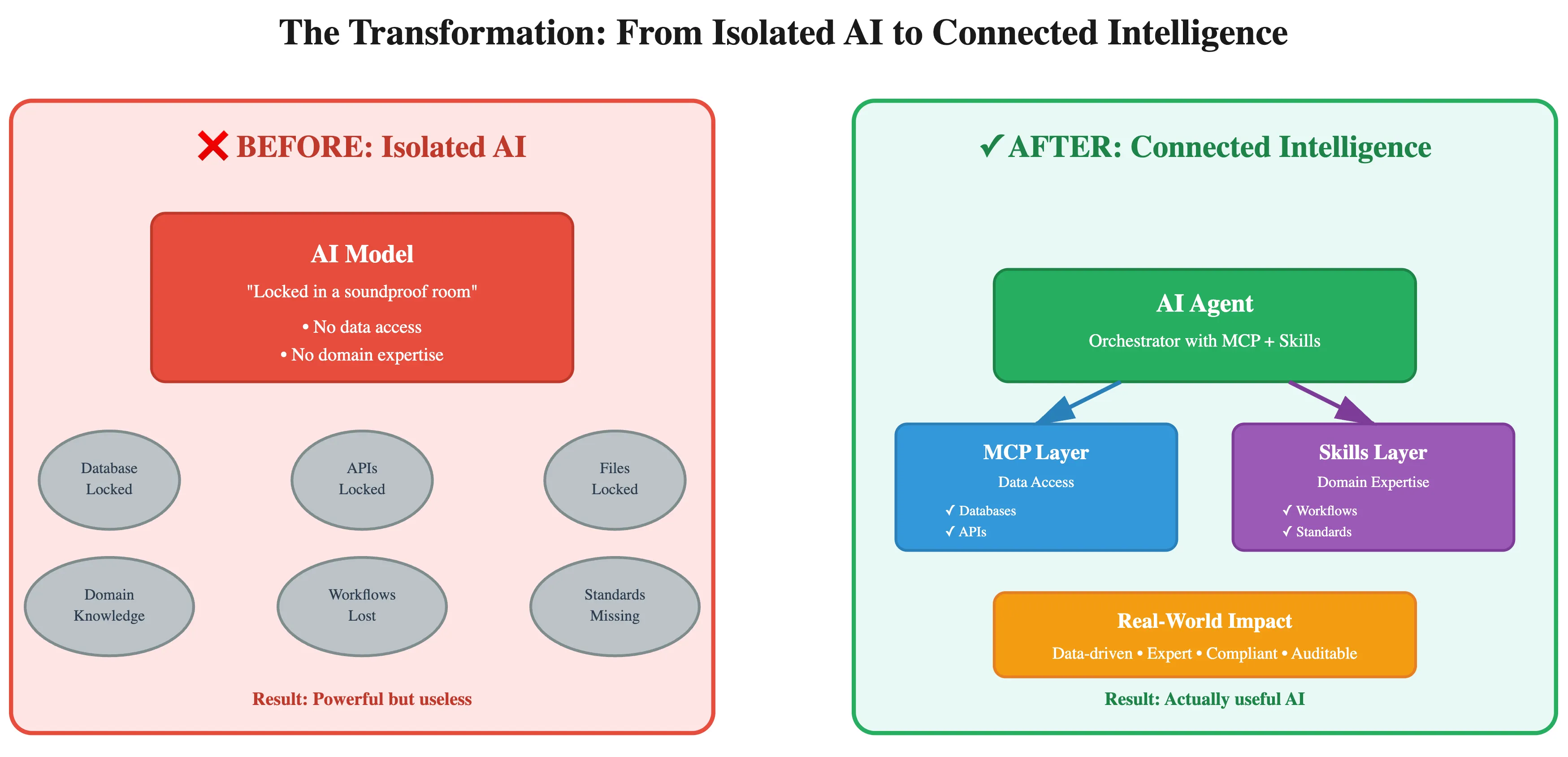
My core setup is Cursor + Claude Code, an AI-powered development environment that connects to everything I need through the Model Context Protocol (MCP). With Zapier MCP, I've wired Claude directly into my productivity stack:
- Google Calendar — I paste a conference invitation into Claude, and the event is on my calendar in seconds, with all the details parsed and reminders set.
- Gmail — I draft and send emails by describing what I want. Sponsorship inquiries, investor updates, customer follow-ups — done without opening Gmail.
- Google Drive — File organization, document retrieval, content management — all through conversation.
- Jira — Bug reports and feature requests go from my head to tickets in seconds. I describe the issue; Claude creates the ticket with proper formatting, acceptance criteria, and the right project.
- Overleaf — I still write academic papers. Claude helps me draft sections, manage LaTeX, and iterate on manuscripts without switching contexts.
And for my company's domain — clinical trials and biomedical research — I use our own TrialMind agents. Literature review, protocol analysis, real-world evidence queries. The same AI that powers our products, I use daily to stay close to the science.
The result: tasks that would have required an EA, a chief of staff, and half my ops team now happen in the flow of my thinking. I don't schedule time to "process email" or "update Jira." I just do it, in seconds, whenever the thought occurs.
This isn't about working more hours. It's about removing the friction between intention and execution. When doing something takes the same effort as asking someone else to do it, you just do it.
A friend recently joked that the new trend isn't scrolling TikTok — it's chatting with Claude Code. I laughed, then realized I wasn't sure if she was joking.
The Case for Doing It Yourself
Speed. No scheduling, no briefs, no waiting. You think, you execute, you ship. The feedback loop is minutes, not weeks.
Quality. Your standards, uncompromised. No game of telephone where your vision gets diluted through layers of interpretation. The output matches what's in your head.
Learning. You stay sharp. Leaders who delegate everything eventually lose the ability to do anything. They become dependent on their teams for judgment. They can't tell good work from bad because they've forgotten what the work feels like.
Satisfaction. There's a reason craftspeople are happier than coordinators. Making things is deeply satisfying. Managing the making of things is not.
The Honest Cons
This isn't a free lunch.
Team development suffers. If you do everything, your team doesn't grow. Delegation was training. Without it, you might ship faster but build weaker organizations.
Burnout is real. AI expands what's possible, but your calendar doesn't expand. Doing more yourself means saying no to other things — or burning out.
Some work still needs humans. Relationships, negotiation, presence, judgment in ambiguous situations — AI can't replace these. Not everything should be done yourself, even if it could be.
Identity is hard. Many leaders built careers on their ability to manage, delegate, and orchestrate. If that's no longer valuable, the shift will be psychologically difficult for a lot of people.
The New Leader
The future leader is a player-coach — but not the compromised version we used to imagine, splitting time awkwardly between doing and managing. The new player-coach does the important work directly and coaches AI to handle the rest.
The org chart implications are significant:
- Fewer layers. If leaders can execute, you need fewer people to execute for them.
- Smaller teams. A person with AI can do what a team of five did before.
- New definition of senior. Seniority should mean "ships more impact," not "manages more people."
The skills that matter are changing too. Taste matters more than ever — AI can generate infinite options, but someone has to choose. Tool fluency is a real skill — knowing how to wire AI into your workflow, not just chat with it occasionally. And the old fundamentals still apply: clear thinking, good judgment, deep expertise.
What To Do
If you're a leader who's been delegating by default, pick one task you've been handing off. Something that requires context you have and your team doesn't. A strategy document. A competitive analysis. A product decision.
Do it yourself. With AI. (Not just ChatGPT, research what AI tools can help you the most on this task, and try several of them, compare and learn.)
See how long it takes. See how good it is. See how it feels.
My guess: you'll do it faster, better, and enjoy it more than you expected. And you'll start questioning what else you've been delegating out of habit rather than logic.
The age of AI doesn't make leaders less necessary. It makes leaders who do more valuable than leaders who delegate.
Stop managing. Start making.
Jimeng Sun is the CEO of Keiji AI, building TrialMind — AI agents for clinical research. He is also a professor at University of Illinois Urbana-Champaign and previously at Georgia Tech, working on AI and healthcare.